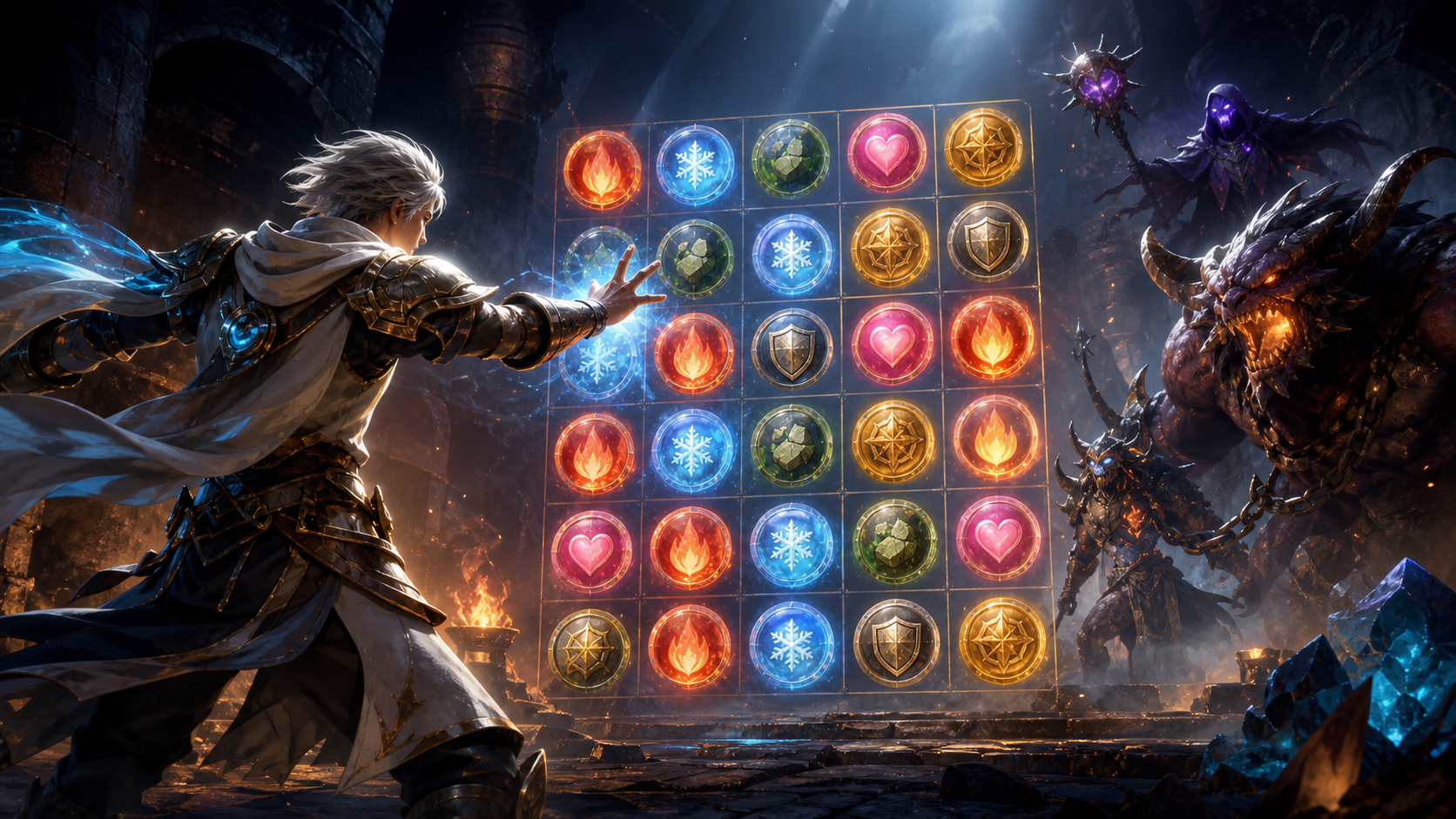
How Free Orb Movement Works
Rethinking the Match‑3 Grid
Traditional match‑3 games ask you to tap or swipe to swap adjacent pieces. Orbwalker throws away that limitation and lets you drag a single orb freely across the entire board under a 5‑second timer. Orbs displace others as you move, and routing one piece can spark chain reactions that cascade across the whole grid — turning every turn into a spatial puzzle.
How Free Movement Changes the Game
In a typical match‑3, the board is static until you make a swap. In Orbwalker, the board reacts in real‑time to your drag. As you pull an orb through rows and columns, other orbs slide aside, creating new alignments before the timer ends. You aren’t matching existing patterns — you’re sculpting the board moment by moment.
This design unlocks a whole new layer of strategy. A single careful drag can line up three simultaneous matches, trigger a long combo, earn extra gold, and set up a defensive block for the next enemy turn. The skill isn’t in tapping fast — it’s in routing deliberately to maximise cascades while the clock ticks down.
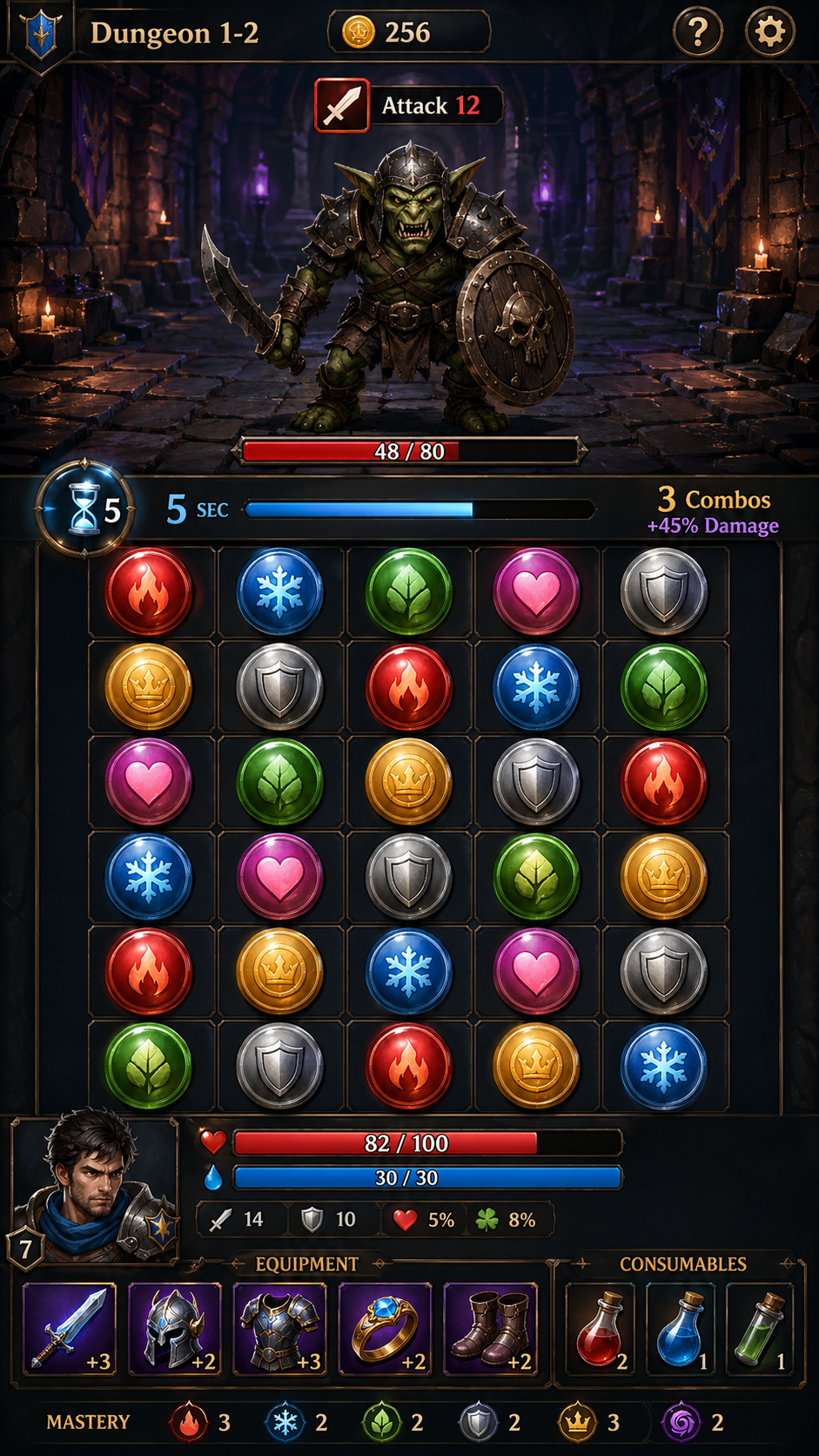
The 5‑Second Timer
The timer creates pressure without punishing hesitation. You always have enough time to scan the board and plan a route, but you can’t over‑analyse every possible path. That sweet spot between deliberate planning and instinct makes each turn feel exciting. Early runs reward quick, clean drags; later runs demand complex, multi‑step routes to deal with stronger enemies.
Why Free Movement Beats Swapping
Swapping limits you to a single exchange per turn. Free movement allows continuous interaction with the board throughout the timer. This means you can start a route, notice a better alignment, and adjust on the fly — something that’s impossible with discrete swaps. The result is a more expressive, satisfying gameplay loop where your own creativity determines the outcome.
Emergent Combos and the Skill Ceiling
Because every route is free‑form, players routinely stumble on combos we didn’t design. A crack in the board that looked like a dead end suddenly becomes a chaining opportunity when you pull an orb through it at the right angle. This emergent quality keeps the game fresh — no two runs play out the same way, and high‑level players are still discovering novel routes months after their first clear.
The skill ceiling rewards practice without demanding memorisation. Knowing when to disrupt a cluster, when to pull a single orb slowly to displace key pieces, and when to gamble on a long drag that risks the timer — these are the nuances that separate good players from great ones.
Designing for Everyone
We’ve worked hard to make free movement feel intuitive from the very first drag. The orb glows as you touch it, and a ghost trail shows the exact path you’re following. Visual feedback and sound cues reinforce successful cascades, so even players new to match‑3 can quickly understand what’s happening and feel powerful.
Tags
Raja Hafify
Founder of Artifisi, building original games from Malaysia.